


By Stephen Ouma Bwire in Nairobi.
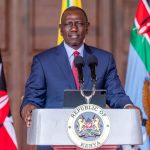
Kenya Director of Public Prosecutions (DPP) Noordin Haji has called on the media in the Eastern African region to always remain ethical and responsible in execution of their duties without fear or favour and to always seek the truth.
He said countries in the Eastern African region are signatory to Freedom of Expression and Access to Information acts, and must work towards upholding principles that promote a free media since it is the fourth arm of government after the Executive, Legislature and the Judiciary.
“ Always work to ensure you uphold integrity in your profession even when the truth may be at cross – roads with government or even media owners. Always seek out the truth and speak this truth to the public,” he said.
Mr Noordin Haji was speaking as Chief Guest of Honour at the Media Council of Kenya – organised event to commemorate the November 2, 2021 international day to end impunity on crimes against journalists at Nairobi’s Crown Plaza Hotel.
UNESCO Eastern Africa Regional Director Prof Hubert Gijzen reiterated his organizations commitment in ensuring promotion of freedom of expression, safety of journalists and observance of human rights.
“ UNESCO pioneered and is supporting establishment of a national mechanism on safety of journalists and stakeholders should help in prosecution of perpetrators of crimes against journalists,” he said.
Media Council of Kenya (MCK) Chairman Mr Maina Muiruri said gaps in the operationalization of the National Mechanism for Safety and Protection of Journalists, including lack of investigations of cases of impunity against journalists, is to blame for non-prosecution of perpetrators of crimes against journalists.
“Many cases of media violations have not been prosecuted in courts of law due to disjointed efforts in bringing culprits to book,” he said.
MCK Director Media Training and Development Mr Victor Bwire said if the gaps among stakeholders can be filled up then the National Mechanism on Safety of journalists will help in protecting journalists, prosecuting offenders and reducing on impunity.
“ If we can fill up gaps among stakeholders then the National Mechanism on Safety of journalists will help in prosecuting offenders and reducing on impunity,” he said.
UNESCO Communication and Information Specialist at Nairobi Regional office, Mr John Bosco Mayiga said the multi – stakeholder approach in preventing crimes against journalists, protecting the media and prosecuting perpetrators of crimes against journalists is the best solution .
He said:” As UNESCO we shall continue to provide support in promoting dialogue with key stakeholders especially state actors in ensuring peaceful solutions.”
Kenya Union of Journalists (KUJ) Secretary General Mr Eric Odour said many journalists have not been able perform their duties freely due to continued harassment , salary cuts and lay off as result of Covid-19 pandemic effects.
“ We call upon employers in Kenya and the rest of Africa, who are laying off workers to end economic war against journalists,” he said.
International Federation of Journalists (IFJ) Adviser Mr Omar Faruk Osman said crimes against journalists and impunity by security agencies in the Eastern Africa region is order of the day.
He said:” The IFJ supports all initiatives geared towards dialoging with stakeholders with view to prosecuting perpetrators of crimes against journalists.”
Uganda Journalists Union (UJU) General Secretary Mr Stephen Ouma Bwire said six journalists have so far been killed in Uganda since 2002 . He said victims include Jimmy Higenyi (Freelance killed in 2002), Dickson Sentongo(Prime radio killed 2010), Paul Kiggundu(Top radio/TV murdered in 2010), Thomas Pere (New Vision newspaper murdered in 2013),Thembo Wapaghasya freelance shot dead in 2012) and Robert Kagolo shot dead April 30 , 2021.
He said: “There is need to dialogue with security agencies since they are leading violators of Press freedom in Uganda. The same security agencies are supposed protect journalists.”
Media Council of Kenya Press Freedom and Safety Advocate Ms Dinnah Ondari said there are increased cases of Gender-Based Violence (GBV) especially sexual harassment in both media houses and in the field.
She said:” In Kenya we are promoting both options of dialoging with culprits under the national mechanism on safety of journalists but also prosecute in courts offenders as a deterrent measure.”
Uganda Editors Forum Executive member Mr Alex Atuhaire said online journalists lack house style regulations or self censorship and as a result they write whatever comes their way .
“ Online publishers face threats of offence communication, computer misuse, defamation or criminal libel” he said.
Media Council of Uganda (MCU) member Mr Peter Okello Jabweli said they still face big challenges in enforcing journalism standards and professionalizing the media as their registration process has been construed to mean licensing and censorship.
He said: “ We intend to conduct sensitization seminars with the journalists to educate them on the need to accredit them formally and professionalize journalism practice. .
The one day conference was organized by the Media Council of Kenya in conjunction with UNESCO Eastern Africa, Kenya Union of Journalists, Transparency International Kenya, Kenya Editors Guild, Article 19, Association of Media Women in Kenya and the International Federation of Journalists (IFJ) ,and was attended by participants from Uganda, Tanzania, Ethiopia, Rwanda, South Sudan and hosts Kenya ■