

By Our Reporters.
Ugandan workers have castigated Gender, Labour and Social Development (GLSD) Ministry for disenfranchising them on the National Social Security Fund (NSSF) mid – term access payout.
Former Workers Member of Parliament Hon Dr Sam Lyomoki and Mr Hassan Mudiba Lwabayi, both current NSSF Board members, signed a March 3, 2022 minority Report in which they rebuked the fund operators .
They said the Seventh extraordinary meeting for the financial year 2021 – 2022 of the NSSF board that sat on March 2, 2022 fund Managing Director briefed the board on NSSF mid – term access to benefits regulations 2022.
But as members they had anticipated that consultations would be undertaken in accordance with the law but which was never done.
“ We do not agree with the formulation of regulation 4 and 11 accordingly and we do present a Minority report to the regulations that have been forwarded to GLSD Minister,” they said.
The trade unionists claimed the regulations used to qualify eligible claimants are wrong and exclude thousands of eligible members. They instead proposed an amendment by inserting sub – regulation 9(4) reading : “ a member who qualifies to access mid – term benefits under the Act and regulations shall be deemed to have contributed if his or her account has been maintained with the fund for a least ten years from the date of his or her first contribution to the fund”.
According to Hon Lyomoki the provision was aimed at catering for a member who has contributed to the fund for a period of 10 years whether the contributions have been consistent or not over the period.
“120 months contributions threshold was not in the spirit of the law as it was being debated in Parliament but is now being administratively smuggled into the equation by a misinterpretation of the letter of the law”, he said.
The report authored by Dr Lyomoki , also Central Organization of Free Trade Unions (COFTU) Secretary General and Local Government General Secretary Mr Hassan Mudiba, faults the NSSF guidelines.
They say the law provides for 45 years and contributions for 10 years but did not qualify whether the said contributions should be the 120 remittances anticipated if a member had been regularly remitting the same monthly without default.
According to records availed by the minority report a total of 65,000 members are 45 years and above and have saved with the fund for at least 10 years but contributions made are less than 120 months.
There are only 48,000 members who are 45 years and above and have saved with the fund for 10 years and realized 120 months contributions threshold. The value for their payout totals Ushs 793b .
” The import of our amendment is to clarify the confusion and discount the misinterpretation so that all contributing members who are 45 years and above and have saved with the fund for at least 10 years, benefit”, says the report.
The duo proposed amending regulation 11 among others to read:” “A person who is dissatisfied with any decision under the regulations may within 30 days from the date of the decision appeal to NSSF Managing Director against the decision”.
At least over 80,000 NSSF members have been unjustly excluded from mid – term access benefits despite saving with the fund for 10 years.
The Workers Eye has established that the controversy arose after Gender and Labour Ministry forwarded the draft NSSF mid-term access benefits regulations, 2022 to the Attorney General’s office for review. This followed consultations between Gender and Labour Minister, Finance Ministry and NSSF management where mandatory 120 monthly contributions was included thereby eliminating several beneficiaries.
The Attorney General recommended that alternative definition in the draft regulation be deleted.
NSSF Managing Director Mr Richard Byarugaba said the decision to retain definition of eligible members provided for in the regulation of the amended Act reduced number of beneficiaries from 130,000 as by June 2021 to 41,174 as at March, 2022.
“ The regulation of the amended act reduced at least 68,000 beneficiaries who should have benefitted from mid – term access payout.” he said.
Mr Byarugaba said payout for the disqualified members is estimated to be Ushs 111b, which is almost the fund’s monthly collection from employers.
Gender and Labour ministry Permanent Secretary Mr Aggrey Kibenge attributed the current controversy to an omission by Parliament.
He said the matter could only be resolved by returning the law to Parliament for an amendment or courts of law declaring it a nullity if a petition was lodged in by a complainant.
Section 20A (2) of the NSSF (Amendment) Act, 2021 stipulates:.
“A member who is 45 years of age and above and who has made contributions to the Fund for at least 10 years, is eligible to mid-term access to his or her benefits, of a sum not exceeding 20 percent of his or her accrued benefits.”
But the Solicitor General’s March 1, 2022 legal opinion to Gender Ministry Permanent Secretary in reviewing the regulations, deleted the original definition in regulation 4(3) seeking to qualify 10 years’ contribution referred in Section 20A to mean ‘maintenance of an account for at least 10 years from the date of application.
But despite the controversy Gender , Labour and Social Development Minister and NSSF management ignored cries of the feeble workers who are disenfranchised and went ahead to pay out mid- term access.
Trade union leaders under NOTU and COFTU and workers generally have dismissed mid – term access as a flop since the intended beneficiaries have been disenfranchized.
Several workers who preferred to remain anonymous said NSSF management had expressed opposition in paying workers their hard – earned money.
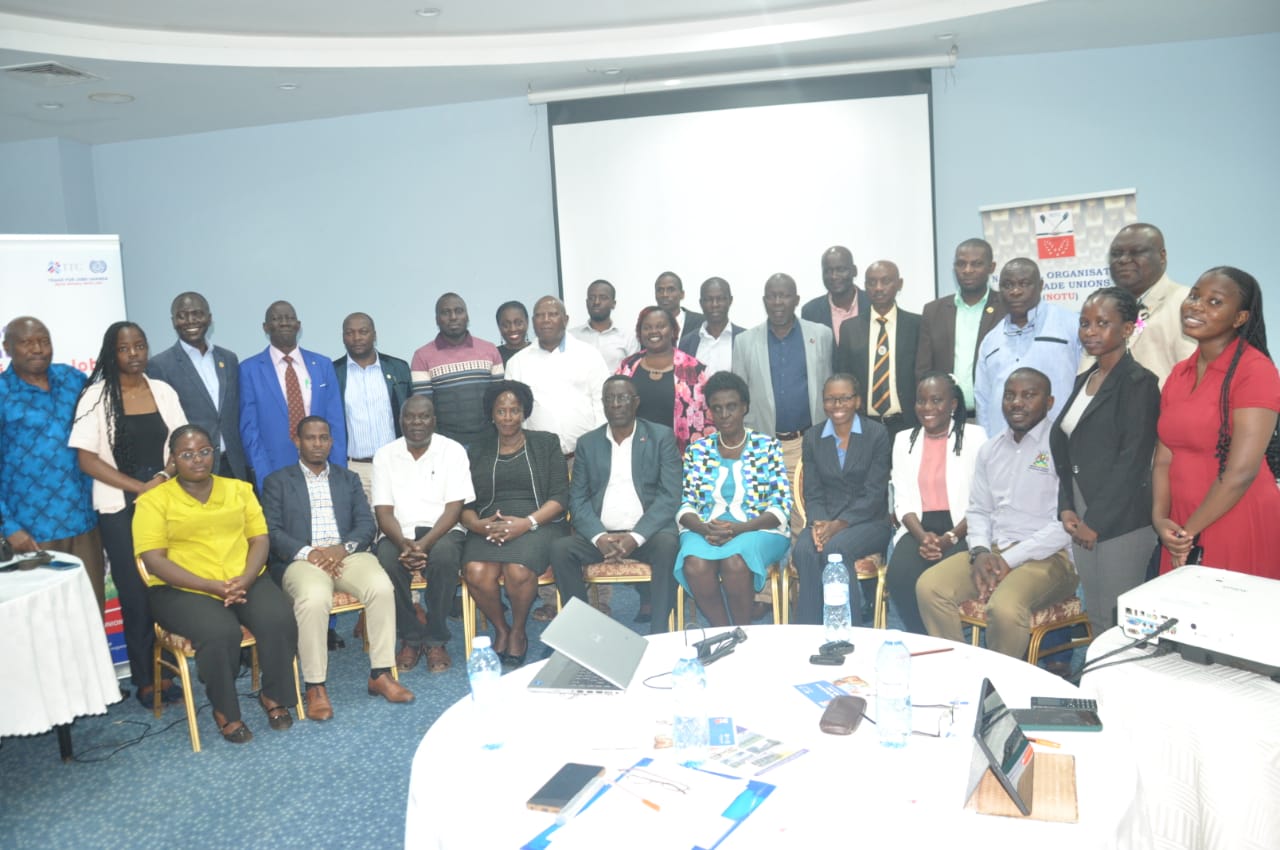
NOTU Chairman General Mr Usher Wilson Owere said trade unions strove for the workers to get Covid-19 recovery relief without any impediments.
He said: “We wanted our members to access part of their money and reorganize themselves after Covid – 19 disruptions,” he said ■