



By Stephen Ouma Bwire in Djibouti
stephen.ouma5@gmail.com
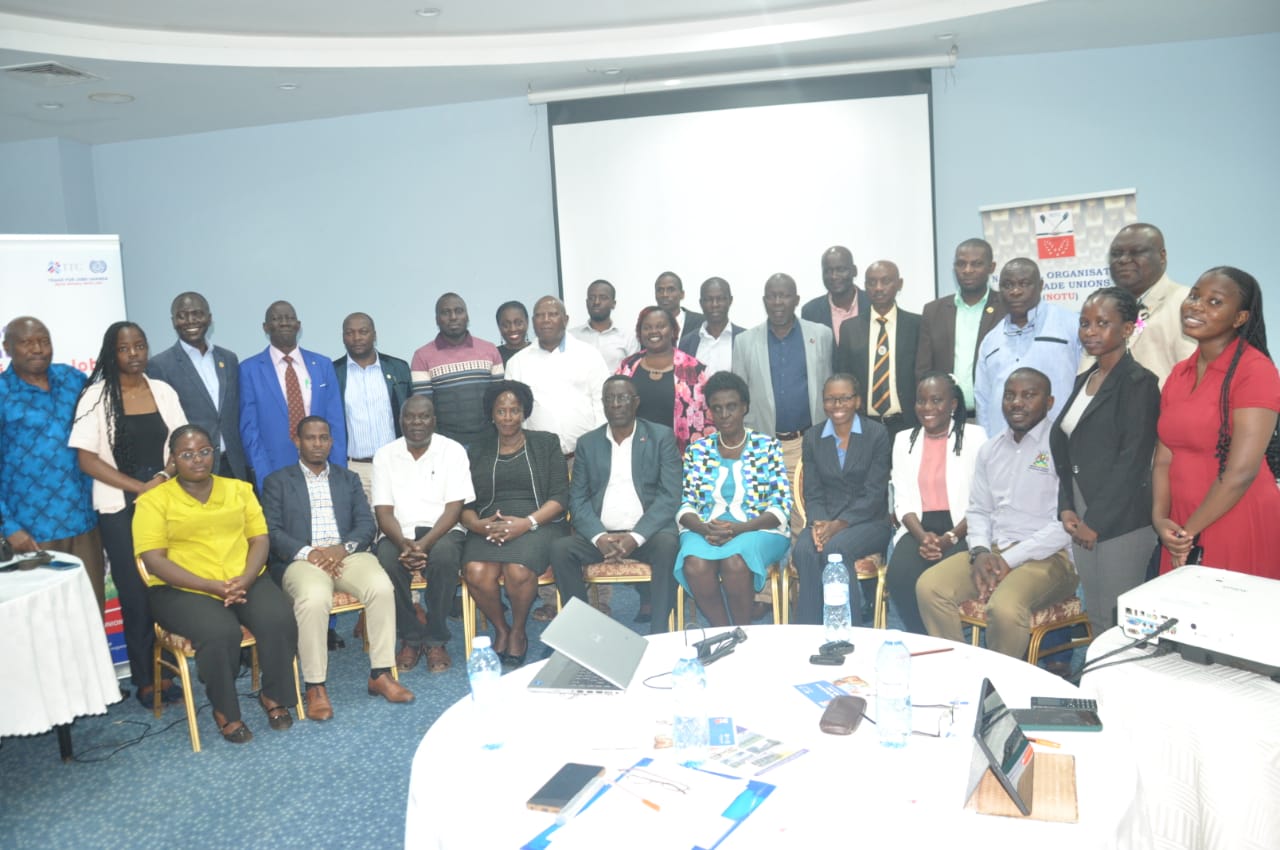
The International Labour Organisation (ILO) and the Intergovernmental Authority on Development (IGAD) with funding from the European Union (EU) conducted a three-day workshop for journalists and employment communicators in the IGAD region.
Participants came from Djibouti, Kenya, Uganda, Ethiopia, Sudan, Somalia and South Sudan,
The workshop held at Djibouti’s Sheraton Hotel was aimed at sensitizing media professionals on labour migration in the region, addressing the plight of migrant workers and how best to enhance communication and reporting on labour migration.
During the workshop it was noted that there has not been adequate information flow to address current and emerging challenges on labour migration through regular communication and reporting on the topic.
It was generall agreed that there iis urgent need to sensitize journalists and create awareness on Labour migration in the region and the plight of workers putting into account the various laws that govern movement and employment of migrant workers.
The high level training was organised by the ILO and IGAD and had the main training conducted by an experienced Labour Communication consultant Mr Charles Autheman as the Chief Trainer.
A multiplicity of resource packages and reports were delivered to media professionals to comprehend better labour migration dynamics within the IGAD region.
“ The ILO’s desirable international order of labour migration is one where people migrate willingly by choice as opposed to necessity and where those who migrate for work enjoy decent working conditions and human rights,” said Ephrem Getnet, Chief Technical Advisor at the ILO.
He said a review of coverage of labour migration by the media within the IGAD region shows low media coverage about the topic which could be due to communication gap or lack of adequate information.
Mr Getnet said in many cases reporting on labour migration and migration in the region is found to be incident based focusing on either capsizing of a boat or death of migrant workers seeking to enter a country illegally or adhock awareness raising programs on TVs, Radios and print media.
“We believe a well-informed media can positively influence public opinion and policy making to improve the living and working conditions of migrant workers and their families and enhance the impact of labour migration on development of countries of origin and countries of destination,” he said
The ILO provides support to its Member States to formulate, or implement evidence based, rights-centered, gender-responsive labour migration policies that protect migrant workers.
IGAD Director for Health and Social Development, Ms Fathia Alwan, said the media plays an irreversible role in influencing policy decisions, investigating challenges, preventing abuses and promoting regular and safe labour mobility management. “The media can also play a positive role in informing potential migrants, migrants, migrants’ families and returnees about the challenges and opportunities across the migration cycle.” she said.
Ms Alwan reiterated, IGAD’s commitment to engage the media in the region as one of the stakeholders to share knowledge on labour migration and provide resources to the media professionals and thereby improve the level of communicating and reporting on labour migration issues.
EU Head of Cooperation in Djibouti Mr Bernard Francois, said, the {IGAD} region is a source and route for migration where migrants are highly vulnerable to human traffickers and the medias plays a a paramount role in giving a balanced report on what is happeneing. We should all be committed in working with the media so that it plays its rightful role on matters pertaining to labour migration.
Charles Autheman, an independent consultant who facilitated the workshop emphasized the importance of media collaboration in covering stories about migration as an emerging beat in journalism.
He pointed out that while African media is covering the abuse of migrant workers in the Middle East, the media there ironically carries stories accusing migrant workers of committing crimes.
“Journalists and communicators need to be more ethical by exhibiting accuracy, objectivity and balanced when covering migrant workers’ stories”, he said..
They discussed mushrooming Labour recruitment companies some of which are run by crooks that send youth to the Middle East countries under dubious arrangements.
Participants were in agreement migrant workers have contributed positively to their countries of origin and countries of destination growth and economic development, and need protection
Journalists and employment communication officiers discussed ways and on how to improve communication and awareness on labour migration. They examined country labour laws with view to harmonizing labour mobility and promoting a “labour free zone” that is devoid of impediments to labour migration.
At the end of the training country delegations came out with workplans for impelementing national projects on training journalists and communicators aimed at creating awareness on Labour migration in IGAD region
The ILO FMPT project which is funded by EU aims at improving opportunities for regulated labour mobility and decent work within the IGAD countries through the development of models of intervention, in the broader context of the regional integration. In the long-term,
it is expected to extend decent work opportunities to current and potential migrants within the region, as well as contribute to regional integration, strengthen the link between economic growth and job growth, and enhance the social and economic integration of migrants.
IGAD is a trade bloc in the Horn of Africa, Nile Valley and the African Great Lakes having Djibouti, Ethiopia, Kenya, Somalia, South-Sudan, Sudan and Uganda as member states. It is headquartered in Djibouti■