





By Hon Agnes Kunihira Abwoli Female Workers MP
Between 1995 and 2005, the global force participation rate decreased from 52.4 per cent. Worldwide, the chances for women to participate in the labour market remain almost 27 percentage points lower than those for men. While gender gaps in participation have been declining in some regions, merely having more women in the labour market is not enough. Women’s lower participation rates translate into fewer employment opportunities, negatively affecting women’s earning capacity and economic security. Women are more likely to be unemployed than men. Globally, youth employment remains an issue of concern, with unemployment affecting young women more than men. The main challenges are listed here below:
DISCRIMINATION
Occupational segregation: Women tend to be concentrated in certain low- paying skilled sectors such as the garment industry , and within it, they tend to be stuck in lower paying occupations such as sewing machine operators and helpers. Due to stereotypes regarding women and men’s aspirations, preferences and capabilities, employers’ perceptions of women’s and men’s skills and attitudes are affected. This trend has been strengthened over the last two decades: as garment production become increasingly skilled and better paid, employing a higher proportion of men.
(i) GENDER BASED DISCRIMINATION UPON RECRUITMENT
Although pregnancy tests and contraceptives are rarely used as a condition for employment in better work countries, more subtle forms of pregnancy-based discrimination are widespread. In combodia and Jordan for example men often face discrimination in recruitment, being put on more precarious contacts or paying substantially higher recruitment fees than women.
(ii) GENDER WAGE GAP
The difference in pay between women and men for work of equal value is particularly linked to working mothers who often face additional care responsibilities, therefore suffering from a significantly reduced earnings capacity.
(iii) SEXUAL HARASSMENT
Due to occupational segregation and incentive systems in factories, sexual harassment is widespread in the global garment industry. Due to negative cultural norms, fear on the part of victims, the lack of functional reporting mechanisms, and a tendency to view this behaviour as “normal”, sexual harassment is largely under reported. However, our confidential impact assessment surveys show that, as better work began operations, an average of 36 per cent of interviewed workers were concerned with sexual harassment in their factory.
(IV) PAID WORK AND CARE
Working hours almost universally, men and women mention the ‘balance between work and family” as one of the top challenges that working women face. Working hours and overtime, putting a burden on women’s roles as primary caregivers in their families and communities.
(V) HOUSE HOLD AND CARE WORK
Women all over the world continue to perform the vast majority of unpaid house-hold and care work. on average, Women carryout at least two and a half times more unpaid household and care work than men. Women continue to work longer hours per day than men when both paid work and unpaid work are taken into consideration. Even when women are employed, they still carryout the larger share of unpaid household and care work , which limits their capacity to increase their hours in paid, formal work. If an adequate continuum of care solutions including high quality child care – is not available from child birth, women are likely to drop out of the labour force or reduce their time spent in paid work.
(VI) PREGNACY RELATED HEALTHCARE
Few better work countries have legislation that allows women workers to access antenatal care during pregnancy without salary deductions. The frequent use of shortterm contracts puts pregnant women in a vulnerable position, often missing out on maternity leave benefits . While all better work countries have maternity benefits enshrined in their law, only Bangladesh and Vietnam offer maternity leave beyond the 14 weeks required by ILO Convention 183. Whether or not maternity leave is paid depends on the worker’s seniority. Breast feeding breaks are also guaranteed by some labour laws, but not always paid.
(vii) VOICE AND REPRESENTATION
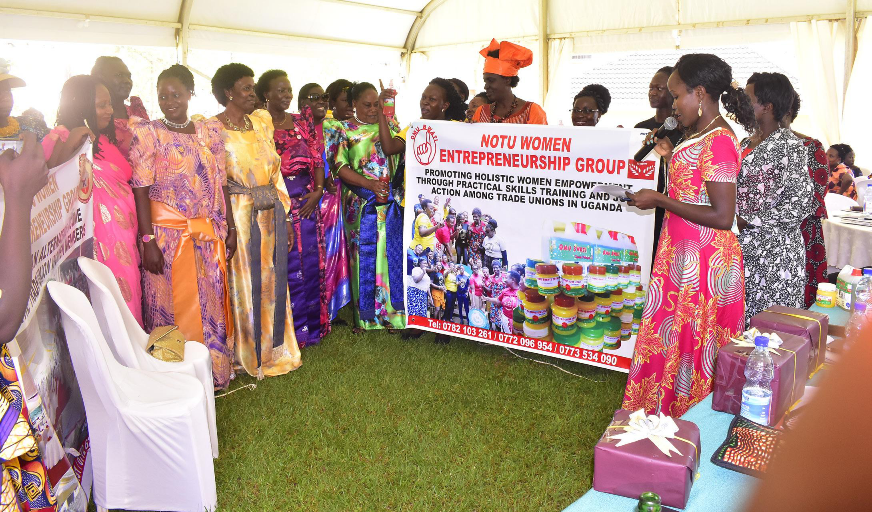
Trade Union representation While women workers are increasingly becoming representatives at the factory level, they are still far from being equally represented. Also, leadership positions in union confederations and federations are still largely dominated by men. This is partly due to widely-recognized gender ideologies, as well as to the reality that women are still expected to assume the majority of child care responsibilities after they return home, discouraging them from serving as trade union representatives.
(viii)LEADERSHIP AND SKILL DEVELOPMENT
supervisory roles:
Becoming a line leader or production supervisor remains the most realistic avenue of advancement for most female workers, since promotions to this level usually come from the sewing lines where women dominate. Relatively few women in the sector perceive gender to be a specific or deciding factor influencing their promotion chances. However, women continue to be under – represented in supervisory roles relative to their share in total employment in the sector. The root causes are pervasive gender stereotypes and differences between women’s and men’s educational attainment■