



T he Uganda Human Rights Commission, in accordance with the Constitution of Uganda under Articles 51 and 52 (1) (c), conducted research on: Working and living conditions of the Uganda Police Force personnel and their implications on observance of human rights. The research was conducted against the background of the Uganda Police Force (UPF) constitutional mandate under Article 212, to protect life and property; preserve law and order; prevent and detect crime; and cooperate with the civilian authority and other security organs and with the population generally. This is in addition to the UPF constitutional obligation to respect, uphold and promote human rights and freedoms in the performance of their functions, as enshrined under Article 20 (2) and 221. Since inception in 1996, the Uganda Human Rights Commission and other partners including government MDAs, development partners, civil society and private sector, have made various interventions to improve police personnel’s appreciation of and compliance with their human rights obligations. The enactment of the Prevention and Prohibition of Torture Act, 2012 and the Human Rights Enforcement Act, 2019 among others, was aimed at preventing human rights violations and ensuring that persons who violate them are individually held liable for their actions. Through engagements with UPF, a number of milestones to ensure observance of human rights were achieved including the establishment of the Directorate of Human Rights and Legal Affairs; the passing of a training policy that made the Human Rights Module a compulsory and examinable subject in police training schools; and the UPF Human Rights Policy, 2019, among others. The police top leadership, has always insisted that violating human rights in the course of law enforcement is not an institutional policy and that was why UPF established a Professional Standards Unit (PSU) to check the conduct of its personnel. In spite of the above efforts and milestones, the situation on the ground does not reflect the investment already made to ensure observance of human rights by the UPF. Persistent human rights violations have cost the government funds in the form of compensation, which would otherwise have been directed to other development initiatives. The UPF has been incurring the cost from its own budget allocation since 2018 when compensation was decentralized to liable government entities. These funds would otherwise be used for improving working and living conditions of personnel and service delivery. However, media reports and UHRC inspections have revealed grave police welfare concerns especially the inadequate and
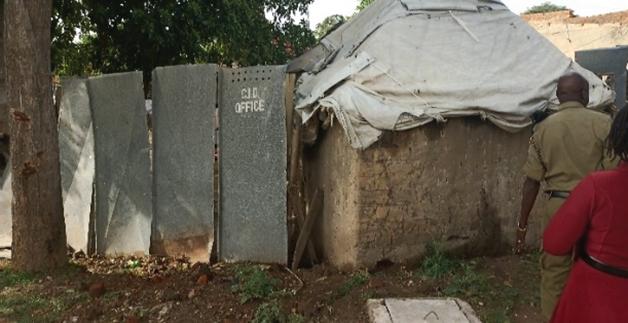
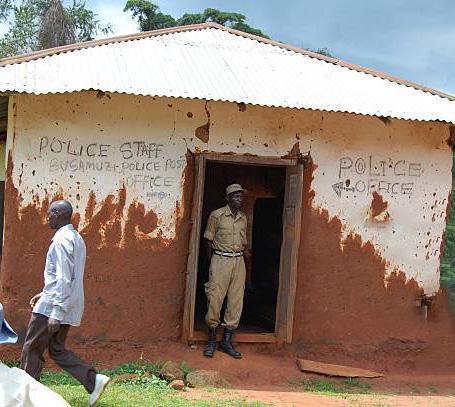
dilapidated accommodation and poor facilitation particularly for personnel. The dire ituation has also come to light through judicial activism aimed at holding government and its actors accountable for the resultant violation of the rights of UPF personnel to dignity
of person, privacy and family among others. There have been calls to Government by different stakeholders including UHRC and Parliament, to address the appalling living and working conditions of the UPF which could be facilitating abuse/violation of human rights.
In view of the foregoing, the UHRC conducted this research on the relationship between living and working conditions of the UPF personnel and how it impacts their observance of human in the performance of their duties. The research sought to establish whether police working and living conditions are a catalyst for human rights abuse or violation, in order
to inform proposals for strategic interventions to address the issues. The objective of the study therefore was to establish the relationship between working conditions and
observance of human rights in the UPF, investigate the relationship between living conditions and observance of human rights by the UPF, assess the moderating
role of socio-political factors on the relationship between working
conditions, living conditions and observance of human rights.
FINDINGS OF THE UHRC ON WORKING CONDITIONS
Uganda Police personnel lack accommodation and many have had to share uniports , grass thatched or cardboard mark – shift timber – made structures with the men sleeping in turns moreover with two or more families.
POLICE LACK OF WORK SUPPLIES AT STATIONS
Police stations and out posts are under – funded with little supplies to cover daily stationery for records keeping and administration. Consequently, police personnel improvise using their own money from their meagre pay to buy some supplies while others depend on the support and good will of well-wishers such as community members, politicians, religious
organizations, schools, District/ Sub-County Local Government offices, NGOs/CSOs and local business owners. In some stations/ posts police personnel request clients/suspects or their relatives to photocopy PF3 or PF18 forms before they are rendered services.
CORRUPTION IN POLICE PERSONNEL TRANSFERS
On deployment and transfers the exercise depends on one’s sex, age, professionalism, rank,
trainings, competence and health status. However, the exercise is generally not fair due to underhand methods, corrupt tendencies, favoritism, tribalism, nepotism, technical know-who, bribery or “kickbacks”. To what matters worse regardless of the process or
factors for deployment or transfer, affected personnel individually foot the bill for their relocation.
INCONSISTENCIES IN SALARIES PAID OUT
Majority of the personnel (52%) earn between Ushs 400,001– Ushs 600,000 per month while 36% were earning between Ushs. 600,001 – Ushs 1,000,000; 5% were below
Ushs. 400,000 and only 1% earned from Ushs 1,400,000 to Ushs 3,000,000.
Salary in the police is rankbased save for the “professionals” as categorized under the Public Service Circular Standing Instruction CSI No. 4 of 2019, It was established that the level of one’s education did not determine his/her salary/pay and the disparity
between academic qualifications and salary range was another challenge as it was unfair for graduates to earn the salary of a constable.